How Frieren Is Reshaping Anime Collectible Culture in India
You know the feeling. You finish an episode of Frieren: Beyond Journey's End and sit there, slightly hollow, because nothing else on your watchlist can match it. It's not just an anime — it's become the benchmark. And with Frieren currently sitting as the highest-rated anime on MyAnimeList in 2026, Indian fans are doing what every true collector does when a show hits them hard: they want to own a piece of it.
The problem? Most collectibles available to Indian fans either arrive through expensive imports with sky-high customs fees, or they're mass-produced plastic that chips after six months. Frieren's world — quiet, beautiful, permanent — deserves better. This guide is for the fans who feel that gap, and want to build a setup that actually honours it.

Why Frieren Hits Different for the Collector Mindset
Frieren isn't loud. It isn't about explosions or power levels. It's about permanence — a thousand-year-old elf watching the world change around her, keeping small relics from people she loved. That's exactly the energy that translates into a serious collector's shelf.
The anime's visual language is deliberate: muted forests, ancient magic, quiet interiors with single meaningful objects. If your setup looks chaotic — too many cheap figures crammed in, different scales and styles fighting each other — it's the opposite of what Frieren's world actually feels like. The fans who really get Frieren are building setups with intention. Fewer pieces, higher quality. Objects that feel like they belong.
This shift is showing up across Indian fan communities on Instagram and Discord. Collectors are moving away from haul culture — where more is more — toward curation. One striking piece that holds the room. That's the Frieren effect.
The Indian Collector's Problem: Quality That Lasts
Here's the honest reality for anime fans in India. Imported Japanese figures from Kotobukiya or Good Smile Company are exquisite — and they'll cost you ₹6,000 to ₹18,000 by the time they clear customs, if they clear customs at all. Cheaper domestic options often look the part in photos and disappoint in hand.
What Indian collectors increasingly want is a third option: locally made, handcrafted, premium quality. Not a knock-off of a Japanese figure. Something original — a display piece that carries the feeling of the fandom without being a licensed replica that could be discontinued or go out of stock permanently.
This is where hand-cast resin sculptures come in. They're heavier than plastic. The finish doesn't fade. You can display them for years and they don't yellow or chip the way cheap acrylic pieces do. And when a piece is hand-painted rather than injection-moulded, each one is slightly unique — which for a collector who just spent 25 episodes watching Frieren collect small, unique relics, hits differently.

Building a Frieren-Worthy Shelf: The 3-Piece Rule
You don't need 50 figures. You need the right three.
Think about the texture of Frieren's world: ancient, elemental, slightly magical. A collector's shelf that honours that aesthetic should feel curated and unhurried. Here's a starting framework that actually works:
- One character or figure piece — the centrepiece, something with real presence. A detailed bust or statue that draws the eye. Not tiny, not crowded by neighbours.
- One textural element — something that adds depth. A small planter with a live succulent, a stone-finish piece, a candle holder. Something organic that makes the shelf breathe.
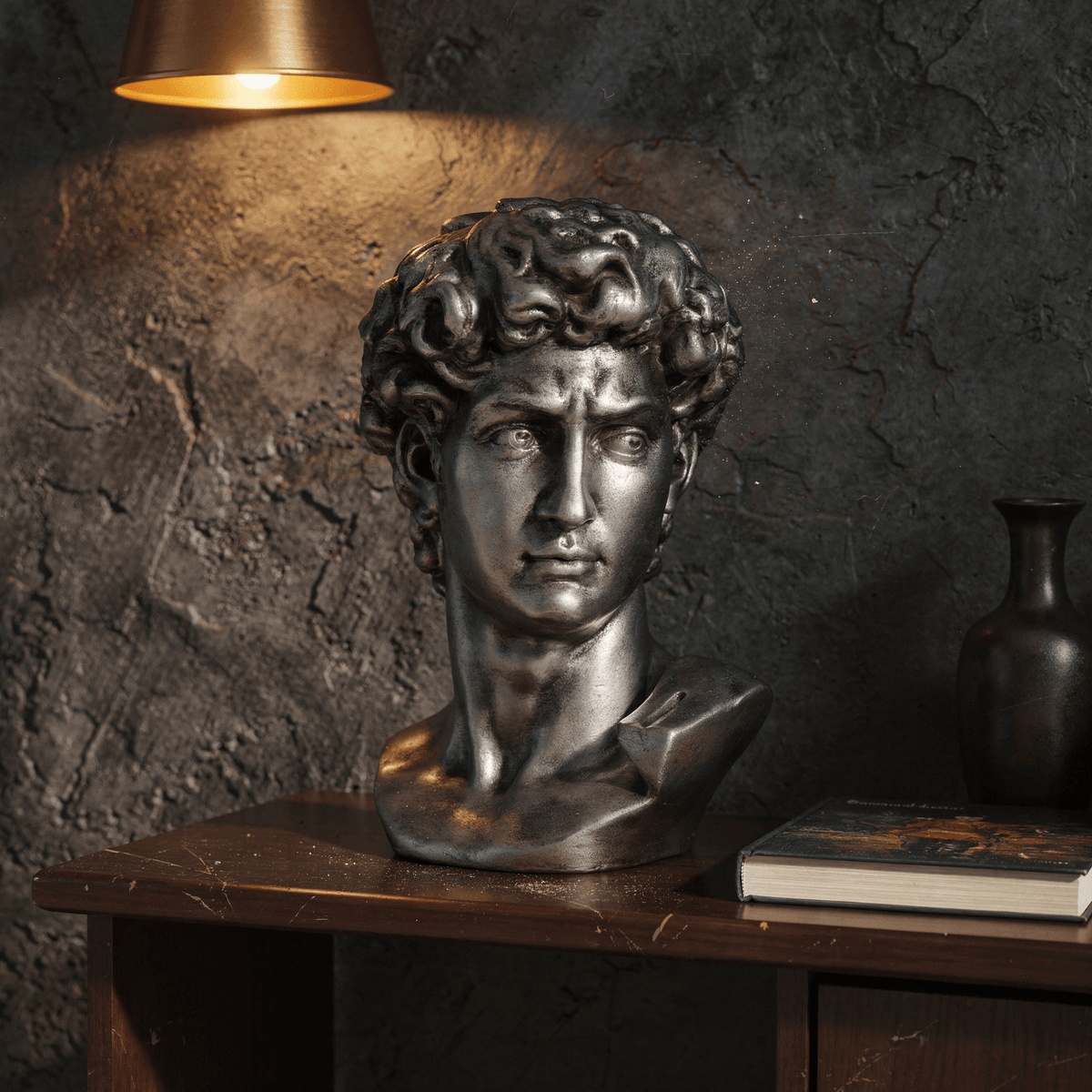
- One art or mythology piece — Frieren's world is steeped in ancient magic and European fantasy mythology. A classical sculpture — a Greek bust, an Egyptian artefact-inspired piece — adds that layered, timeless quality that cheap plastic figures never can.
Together, three intentional pieces outperform a shelf crowded with forty-eight cheap mini figures every single time. And photographed well, they do serious work on social media — which for collector communities in India, matters enormously.
For Indian Buyers: What to Actually Look For
Before you spend anything on a Frieren-inspired setup, here are the things that actually matter:
Material: Look for hand-cast resin, not ABS plastic. Resin has weight, which reads as quality the moment you pick it up. Plastic wobbles. Resin sits.
Finish: Matte or satin finishes work far better for a Frieren aesthetic than high-gloss. The anime's colour palette is desaturated and earthy — your display pieces should match that quiet confidence.
Scale: Pick a consistent scale across your shelf. Mixing a 5cm chibi figure with a 30cm bust looks chaotic. For a minimalist three-piece setup, aim for pieces between 15–30cm.
Local availability: Import delivery to India takes 3–6 weeks and customs can hold packages or add surprise fees on arrival. Buying from an Indian brand that makes locally means no customs risk, no surprise charges, and you can actually find real customer photos taken in Indian homes — not just studio shots.
Your Shelf, Your Permanence
Frieren spends centuries holding onto mementos of people she loved — a small piece of thread, a hairpin, a folded note. The objects matter because they're real. They persist. They have weight.
That's the argument for buying a handcrafted piece instead of a cheap figure you'll forget in six months. A sculpture made by hand, finished carefully, placed with intention on your shelf — it becomes yours. It becomes part of the space. In ten years, it won't look like a relic of a discount impulse buy. It'll look like a choice you made.
Indian collectors who take their setups seriously are already making that shift. Frieren's 2026 moment is the perfect signal to do the same.
Ready to build a shelf that feels permanent?
Explore Archadia Decors' collection of handcrafted sculptures, figurines, and collector pieces at archadiadecors.in. From mythology-inspired busts to hand-cast resin display pieces, every piece is made to last — and made to mean something.